The network
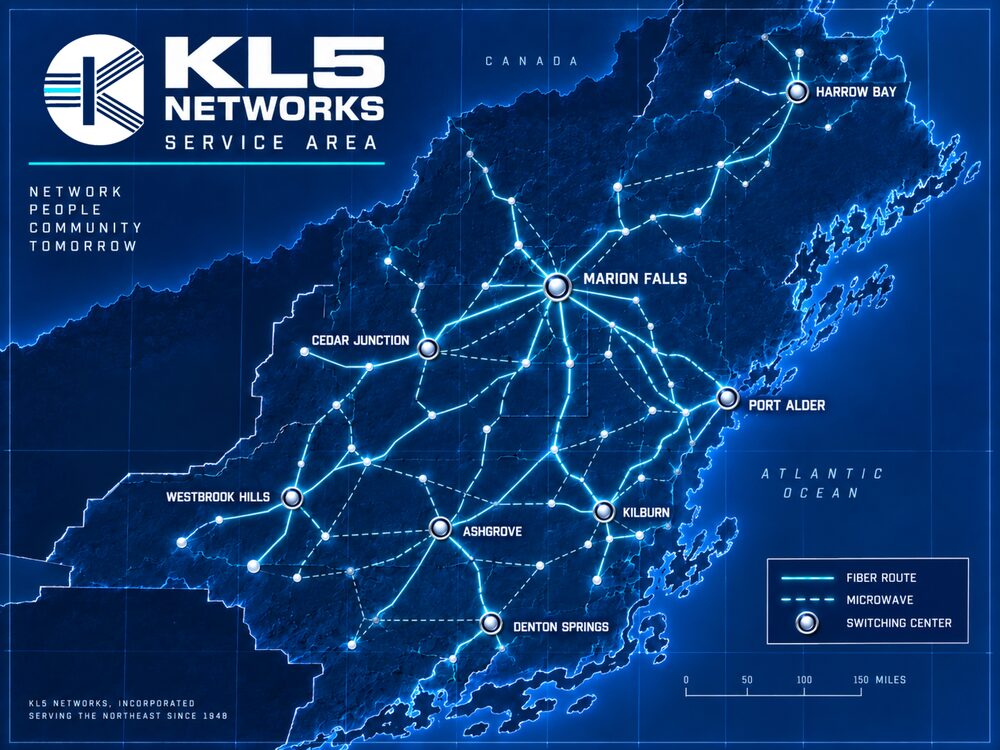
Four hundred and eighty-two active trunk routes, thirty-six on standby, eight local exchanges and a microwave backbone that does not care what the weather is doing to the cable plant.
Service area
Network operations
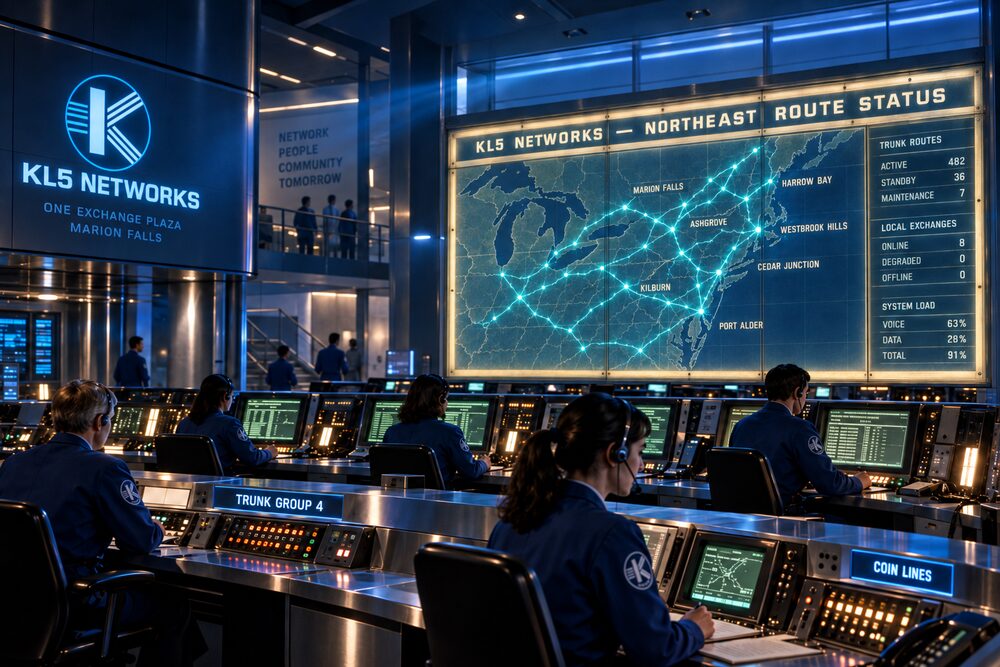
Every trunk group, every exchange and every coin line in the region reports to one room. Route status is displayed on the wall board in real time; operators hold a position around the clock, and a fault anywhere on the network is visible here before the first customer picks up a handset to report it.
Digital switching
The Marion Falls central office carries the region's switching on digital equipment, aisle after aisle of it. Calls that once took a crossbar frame a full second to set up now complete before you have finished dialling.
Outside plant
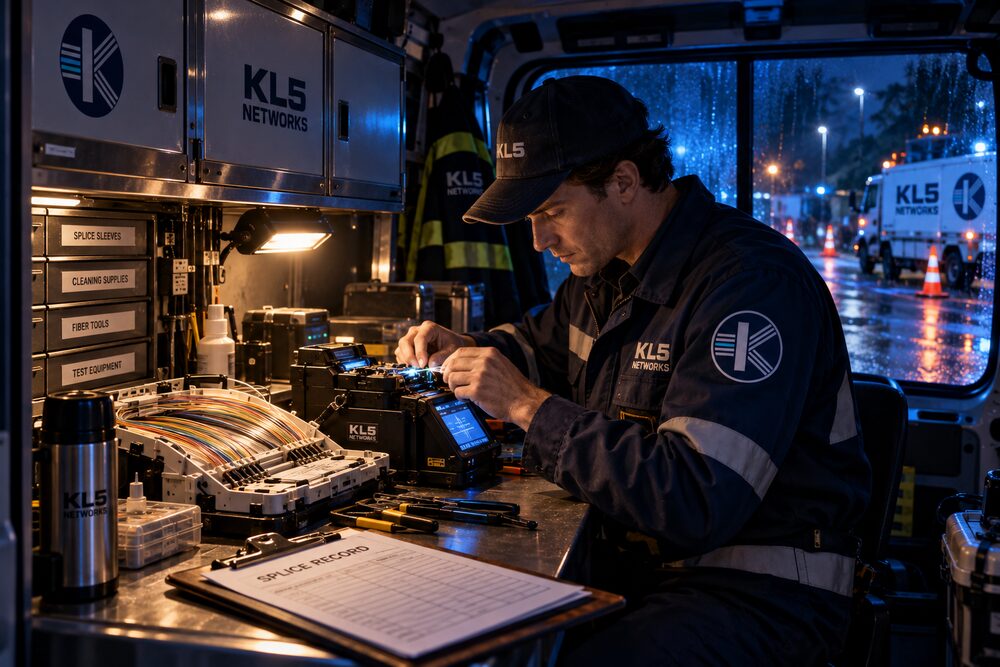
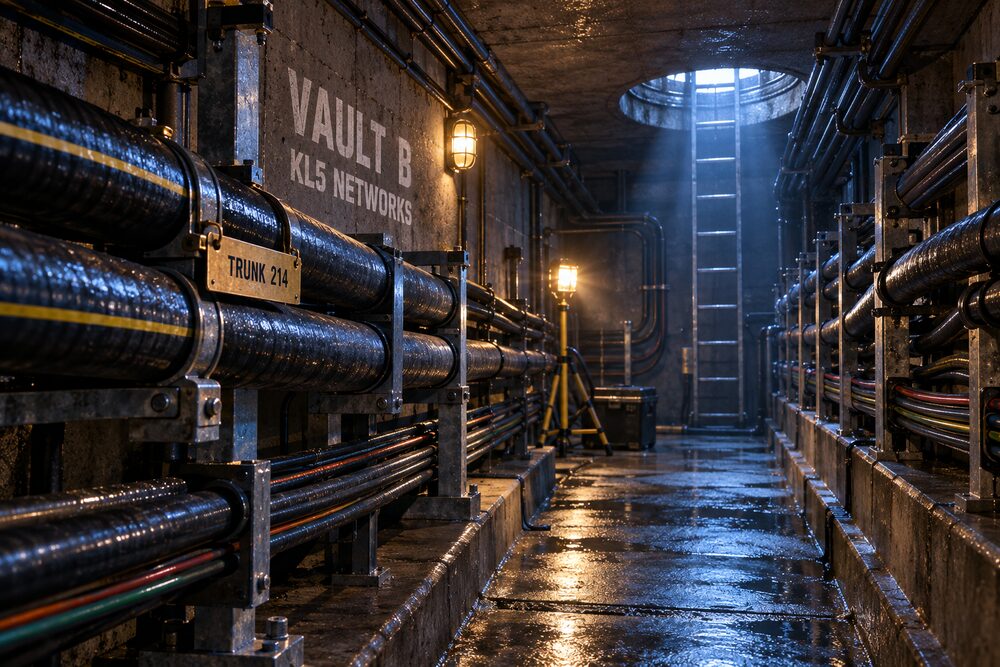
How a coin line works
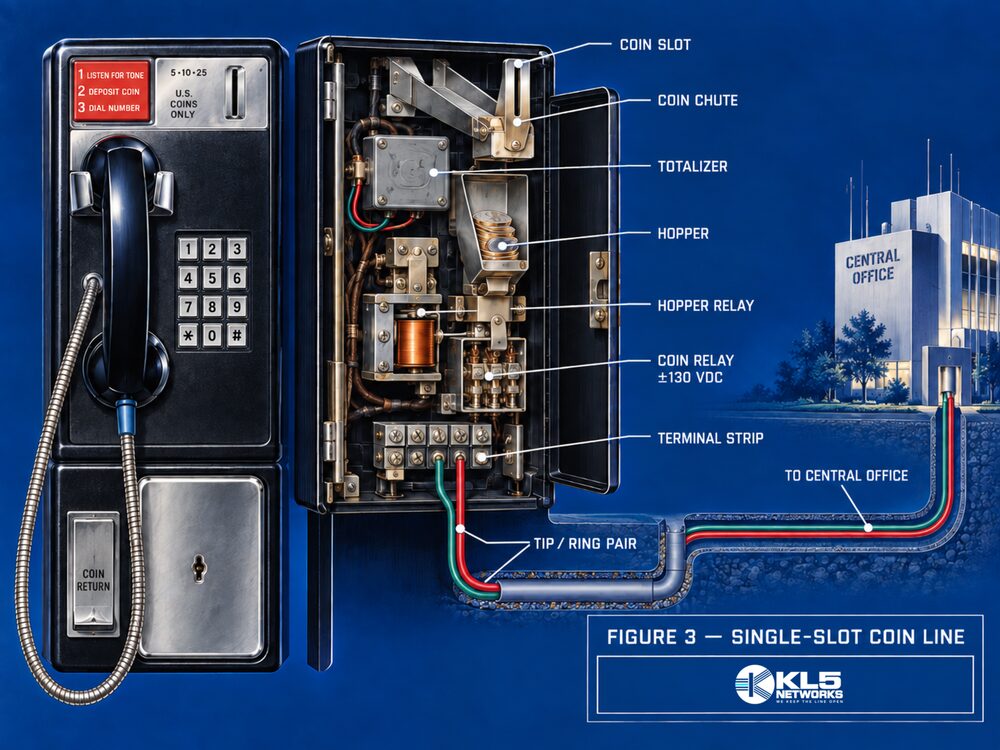
A public telephone is not a smaller version of the one in your hallway. The coin it takes has to be counted, held, and then either collected or returned depending on how the call ends — and the decision is made not in the phone but at the central office, a mile or more away.
The totalizer counts each deposit and signals its value down the line. The hopper holds the coins while the call is up. When the call ends, the office applies ±130 volts to the line, and the polarity of that voltage tells the coin relay whether to drop the coins into the vault or return them to the customer.
Two wires do all of it. Tip and ring, the same pair that carries your voice.